Trans-Human
We acknowledge the people of the Kulin Nations and pay our respect to their elders past, present and future. This always was and always will be Aboriginal land.
Overview
Crafting Futures with Nature’s Wisdom
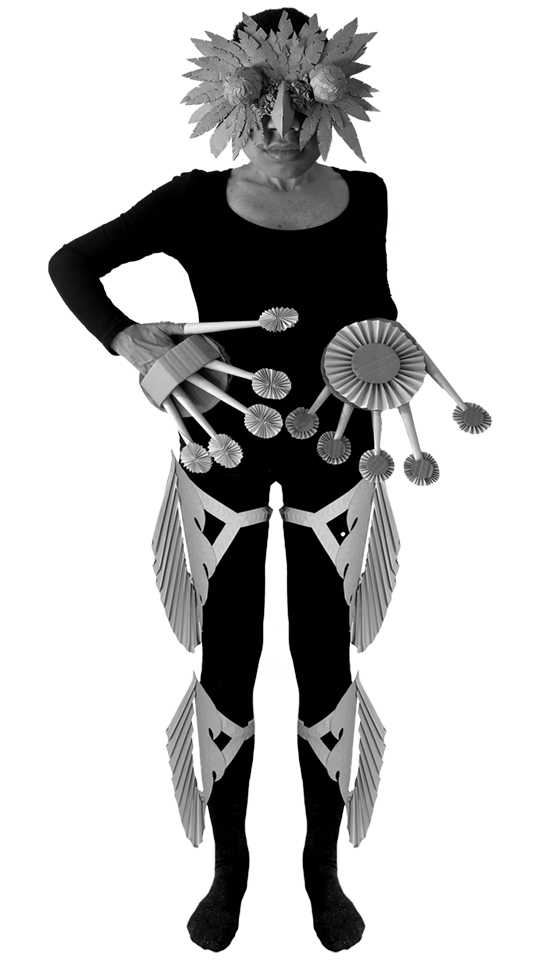
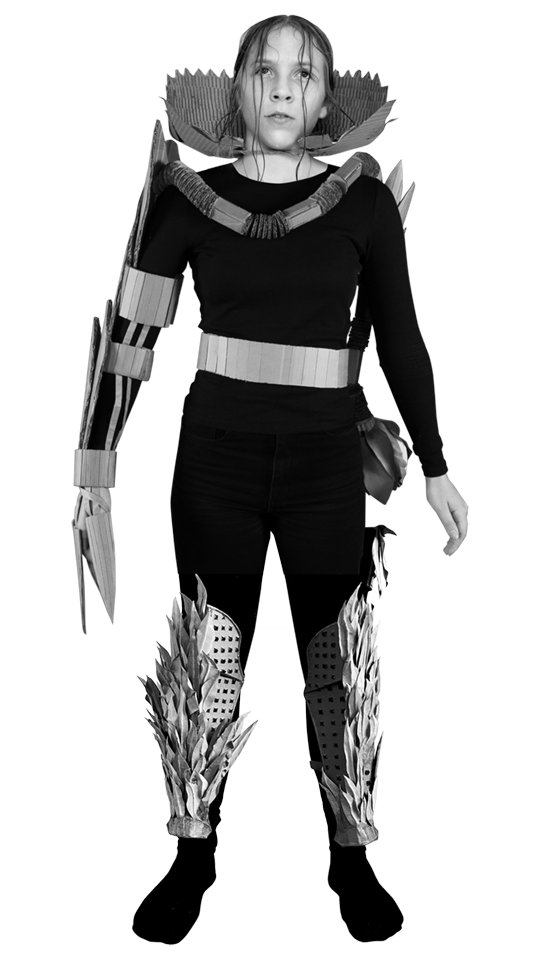
This vibrant exhibition is the culmination of the imaginative efforts of first-year Bachelor of Design students at Monash University. Within the first six weeks of their academic adventure, they embark on redefining the human body’s capabilities, guided by the United Nations Sustainable Development Goals (SDGs). Crafted solely from kraft paper and card, each wearable is a seamless blend of natural insight and human creativity. These speculative designs represent visions of how biological strategies could fortify humanity against future challenges. Every piece serves as a powerful reminder of the transformative potential inherent in design when we unite our creativity with a commitment to societal and planetary health.
The Future Challenges
Using the Sustainable Development Goals (SDGs) to frame the project provides students with direct access to reliable information about the breadth and complexity of the challenges we face.
When this project was initially conceptualised in 2020, first-year students were tasked with addressing the theme of Climate Change. In 2022, we broadened the theme to ‘Challenges of the Future’ to introduce more diverse perspectives into the mix. Despite this expansion, approximately 85% of students remained focused on exploring Climate Change. There are several potential explanations for this phenomenon: our project brief may have inadvertently privileged Climate Change-related topics; students, especially those new to the university, tend to gravitate towards familiar topics; or they may perceive Climate Change as the predominant challenge of our future.
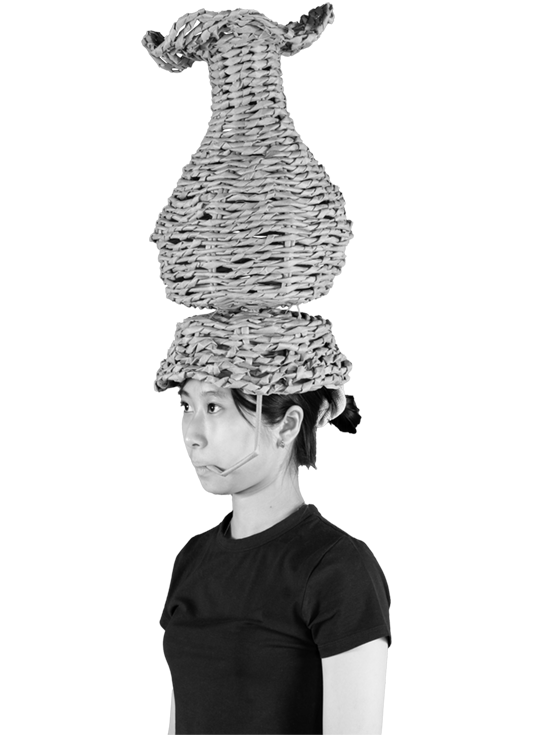
- Bamboo Vessel
- Jesica Rosmaidy
- SDG 6. Clean water and Sanitation
- Bamboo as a biological model for filtering and storing water
The Future Challenges explored
- Climate Change
- Geopolitical Security
- Thriving Communities
2022
2023
2024
- *Data derived from project submissions
- †Data provided by students and validated against project submissions
- ‡Data provided by students
Breakdown by United Nations Sustainable Development Goal
Strategies from Nature
The project centers on a fundamental truth – we are not separate from nature; we are an integral part of it. Prompting us to ponder how, with nature as our mentor, can we design the world we aspire to inhabit.
We embrace the principles of biomimicry, an approach that encourages us to learn from the wisdom of nature. It’s not just about studying living organisms; it’s about recognising the intricate relationships we share with them. Respect for the natural world extends to valuing it not for what we can exploit, but for the profound knowledge it imparts. As we learn from the strategies honed by countless species over millions of years of evolution, we speculate on how to design might shape us and the planet.
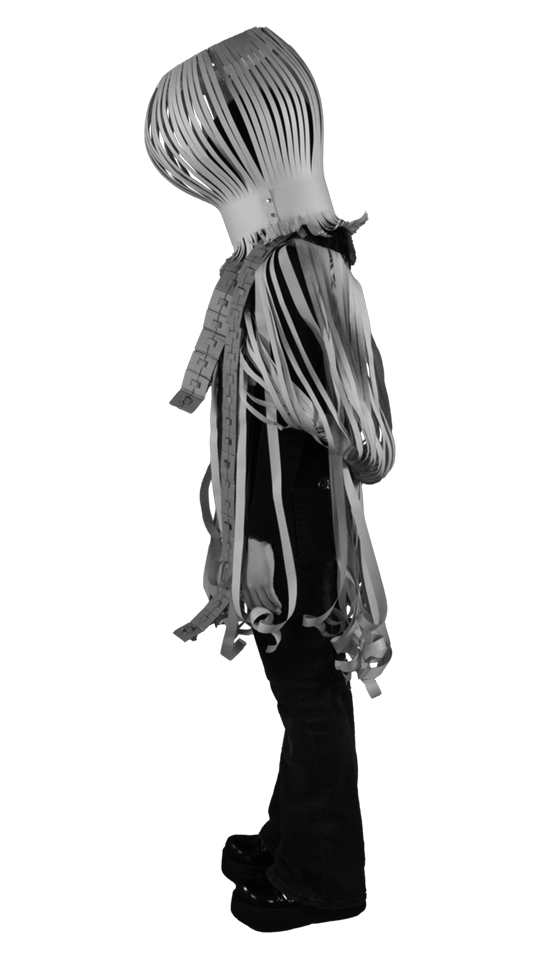
- Jellywear
- Gwen Yi Xuan Lee
- SDG 14. Life Below Water
- The jellyfish ‘bell’ as a biological model for the design of energy efficient swimwear
Desired functions of the biological strategies
The categorisation of the desired functions has been adopted from the Biological Strategies section on asknature.org. Each section contains a series of nested sections.
The kingdom of life the strategies are from
9.46%from 2023
Animalia
Animalia is the classification that includes diverse multicellular organisms, like insects and mammals. They eat food, move around, and have complex body structures.
8.33%from 2023
Plante
Plantae refers to the kingdom that includes plants like trees and flowers. These organisms make their own food using sunlight and have rigid cell walls. They don’t move around like animals.
257%from 2023
Fungi
Fungi, like mushrooms and molds, are nature’s recyclers, helping to break down dead materials. They’re simple organisms with unique cell walls.
900%from 2023
Microorganisms
Tiny life forms, including bacteria, viruses, and more. They can be beneficial or harmful, like the germs that make us sick or the ones that help in processes like digestion. They’re all around us, even though we can’t see them without a microscope.
Animals by category
Vertebrates
Vertebrates are animals with a backbone, including mammals, birds, reptiles, amphibians, and fish.
- Amphibians
- Birds
- Fish
- Mammals
- Reptiles
Invertebrates
Invertebrates are animals without a backbone, such as insects, mollusks, and worms.
- Annelid
- Arthropods
- Cnidarians
- Crustaceans
- Enchinoderms
- Mollusks
- Porifera
By popularity
Animalia
- Desert Beetle (9)
- Lizard (Australian Thorny Devil) (8)
- Octopus (8)
- Butterfly (7)
- Camel (6)
- Coral (6)
- Shark (6)
- Fish (5)
- Jellyfish (5)
- Armadillo (4)
- Bee (4)
- Oyster (4)
- Pangolin (4)
- Porcupine (4)
- Eel (Electric) (3)
- Elephant (3)
- Firefly (3)
- Penguin (3)
- Anemone (2)
- Ant (2)
- Axolotl (2)
- Barnacle (2)
- Clam (2)
- Dragonfly (2)
- Gecko (2)
- Hero Shrew (2)
- Kangaroo (2)
- Oriental Hornet (2)
- Pelican (2)
- Sea Sponge (2)
- Seahorse (2)
- Snake (2)
- Squid (2)
- Turtle (2)
- Whale (2)
- Woodpecker (2)
- Beaver (1)
- Beetle (Diabolical Ironclad) (1)
- Bird (1)
- Cat (Canadian Sphynx) (1)
- Cephalopods (Deep Sea) (1)
- Conch (1)
- Crocodile (Salt Water) (1)
- Cuttlefish (1)
- Dog (1)
- Eagle (Bald) (1)
- Featherstar (1)
- Feline (1)
- Frog (1)
- Giant Larvacean (1)
- Glass Sponge (1)
- Glaucus Atlanticus (1)
- Hamster (1)
- Hare (1)
- Hedgehog (1)
- Heron (Black) (1)
- Herring (Atlantic) (1)
- Himerometra Robustipinna (1)
- Iberian Ribbed Newt (1)
- Koala (1)
- Manta Ray (1)
- Mantis (1)
- Meerkats (1)
- Mountain Goat (1)
- Ostrich (1)
- Parrot (1)
- Peacock (1)
- Pigeon (1)
- Pistol Shrimp (1)
- Platypus (1)
- Polar Bear (1)
- Praying Mantis (1)
- Pufferfish (1)
- Ray (Electric) (1)
- Rhinoceros (1)
- Saiga Antelope (1)
- Salamander (1)
- Sandgrouse (desert Bird) (1)
- Scorpion (Desert) (1)
- Sea Cucumber (1)
- Sea Urchin (1)
- Seahorse (1)
- Shellfish (1)
- Sloth (1)
- Snail (1)
- Snail (Desert) (1)
- Spider (Diving Bell) (1)
- Spider (Phonognatha Graeffei) (1)
- Squirrel (Flying) (1)
- Starfish (1)
- Stonefish (1)
- Sugar Glider (1)
- Swan (1)
- Zebra (1)
Plante
- Cactus (5)
- Lily Pad (3)
- Pinaceae (conifer Cones/pine Trees) (3)
- Pitcher Plant (3)
- Plant (3)
- Sunflower (3)
- Agave (2)
- English Ivy (English) (2)
- Kelp (2)
- Lotus (2)
- Succulent Plants (2)
- Airplant (1)
- Aloe Vera (1)
- Bamboo (1)
- Banyan Tree (1)
- Broadleaf (1)
- Bromeliad Flower (1)
- Cape Sundew (1)
- Chrysanthemum Flower (1)
- Eastern Skunk Cabbage (1)
- Eucalyptus (1)
- Fenestraria Aurantiaca (1)
- Fern (Boston) (1)
- Flytrap (1)
- Hibiscus Flower (1)
- Ivy (Boston) (1)
- Leafy Plants (1)
- Maize Husks (1)
- Moss (1)
- Mycorrhizae Root Systems (1)
- Peace Lily Plant (1)
- Ranunculus Adoneus (snow Buttercup) (1)
- Rose (1)
- Rosette Succulents (1)
- Seagrass (1)
- Spider Plant (1)
- Stinging Nettles (1)
- Sugarcane (1)
- Trees (1)
- Venus Fly Trap (1)
- Water Vine (1)
- Willow Tree (1)
Fungi
- Fungi (4)
- Lichen Fungi (2)
- Mushrooms (2)
- Brown Rot And White Rot (fungi) (1)
- Mycorrhizae (fungi) (1)
- Omphalotus Nidiformis And Roridomyces Phyllostachydis (fungi) (1)
- Oyster Mushroom (1)
- Polypore (shelf Mushroom) (1)
- Sclerotinia Sclerotiorum And Butrytissp (1)
- Split Gill Mushroom (1)
Micro Organisms
- Algae (2)
- Cyanobacteria (algae) (2)
- Algae (Bioluminescent) (1)
- Algae (Green) (1)
- Algae (Micro) (1)
- Algae (Red) (1)
- Archaeoglobus (1)
- Bacteria (1)
- Coral Fluorescent (Proteins) (1)
- Deinococcus Radiodurans (bacteria) (1)
- Exoelectrogens (bacteria) (1)
- Photosynthetic Cells (1)
- Rhizobia (1)
- Tardigrade (1)